Transmission Services in Red Bank, MS

Transmission System Overview in Red Bank, MS
Transmission services involve the inspection, maintenance, diagnosis, and repair of a vehicle’s transmission system, which is responsible for transferring engine power to the wheels while controlling speed and torque. At Mejia Mechanic in Red Bank, MS, transmission work focuses on ensuring that gear changes, fluid pressure, and internal components function correctly under varying driving conditions.
The transmission system plays a critical role in vehicle performance by managing how engine power is delivered to the drivetrain. It allows the engine to operate efficiently at different speeds without losing power or control. Depending on the vehicle, transmissions may be automatic, manual, or continuously variable, each with its own internal structure and operating principles.
Over time, transmission components can wear due to heat, friction, and fluid degradation. When this occurs, drivers may experience delayed shifting, slipping gears, or unusual noises during operation. Transmission services address these issues through detailed inspection and repair of mechanical and hydraulic systems.
Transmission Function and Gear Operation
The transmission system controls gear ratios to ensure that engine power is efficiently transferred to the wheels. This process allows vehicles to accelerate smoothly and maintain appropriate speed control.
Gear Engagement Process
Gears inside the transmission engage and disengage based on vehicle speed and engine load. Proper engagement ensures smooth acceleration without loss of power.
Torque Conversion and Power Delivery
The transmission adjusts torque output to match driving conditions. Lower gears provide higher torque for acceleration, while higher gears optimize fuel efficiency at cruising speeds.
Shift Timing and Coordination
In automatic transmissions, shift timing is controlled by hydraulic pressure and electronic signals. Proper timing ensures smooth transitions between gears without jerking or hesitation.
Transmission function depends on precise coordination between mechanical gears, hydraulic pressure, and electronic control systems.
Transmission Fluid Service and Hydraulic Performance
Transmission fluid is essential for lubrication, cooling, and hydraulic pressure within the transmission system. Proper fluid condition directly affects shifting quality and internal component protection.
Fluid Level Inspection
Transmission fluid levels are checked to ensure the system has adequate lubrication and hydraulic capacity. Low fluid levels can lead to slipping or delayed shifting.
Fluid Condition Evaluation
Fluid is inspected for color, smell, and contamination. Burnt or dark fluid may indicate overheating or internal wear within the transmission system.
Hydraulic Pressure Monitoring
Hydraulic pressure is evaluated to ensure that gear shifts occur smoothly and at the correct timing. Inconsistent pressure can lead to shifting issues or gear engagement failure.
Transmission fluid maintenance is critical for maintaining internal lubrication and ensuring consistent hydraulic operation.
Transmission Mechanical Components and Wear Inspection
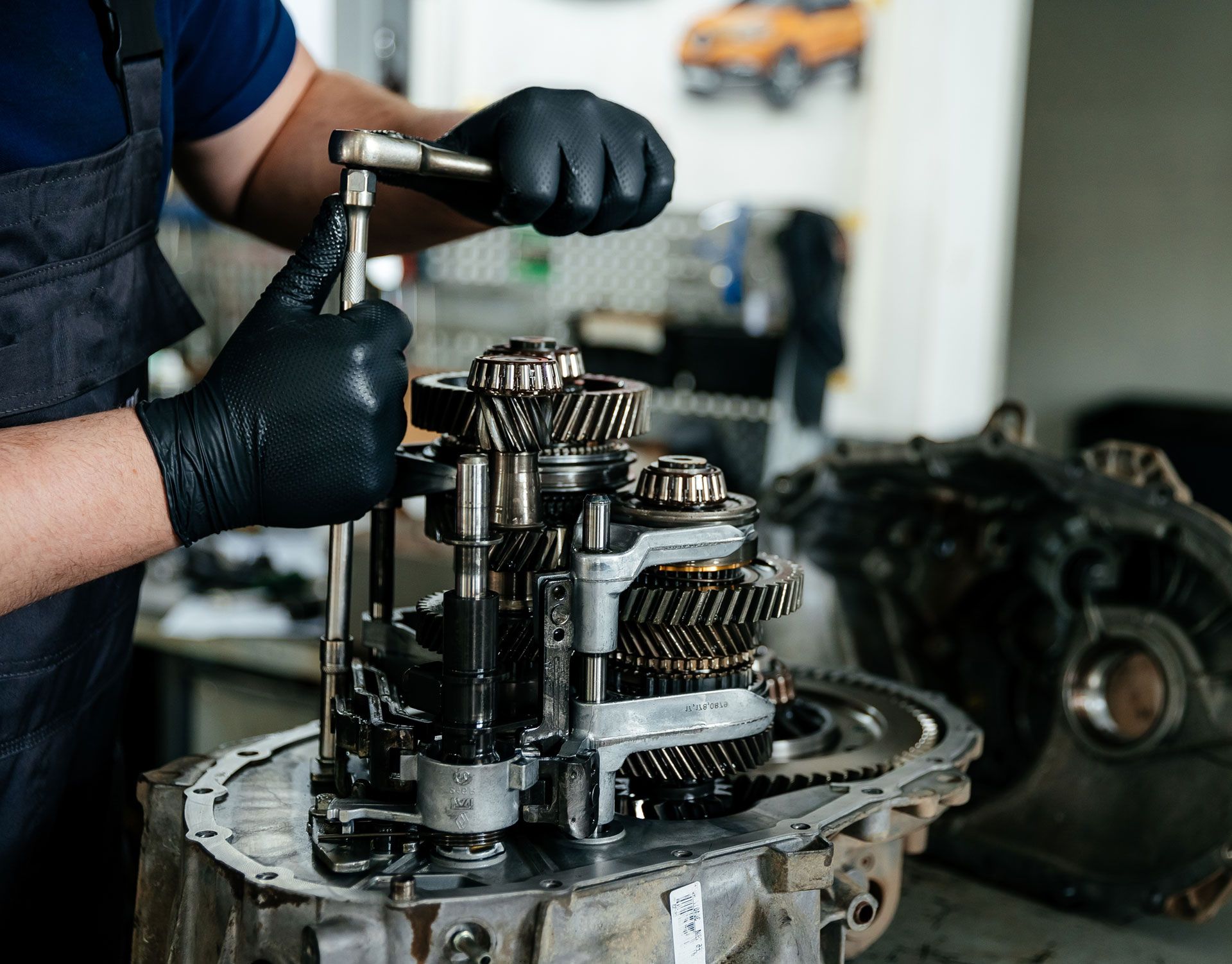
The internal structure of the transmission includes gears, clutches, bands, and other mechanical components that must operate under high stress and temperature.
Gear Set Condition Assessment
Gears are inspected for wear, chipping, or misalignment. Damaged gears can cause grinding noises and poor power transfer.
Clutch Pack Operation
Clutch packs control gear engagement in automatic transmissions. Worn clutches can result in slipping or delayed shifting.
Torque Converter Function
The torque converter transfers engine power to the transmission using hydraulic fluid. Malfunctions can lead to reduced acceleration or overheating.
Internal Seal Integrity
Seals within the transmission prevent fluid leakage and maintain pressure. Worn seals can cause fluid loss and hydraulic inefficiency.
Mechanical inspection ensures that all internal components function correctly under load and temperature stress.
Transmission Diagnostic Testing and Performance Evaluation
Transmission diagnostics involve identifying operational issues through testing and system analysis. This includes both mechanical evaluation and electronic scanning for fault codes.
Shift Pattern Analysis
Shift behavior is observed to determine whether gear changes occur smoothly and at correct intervals. Irregular shifting may indicate internal wear or control system issues.
Electronic Control System Evaluation
Modern transmissions use control modules to manage shifting. These systems are tested for proper communication and sensor accuracy.
Fault Code Interpretation
Diagnostic trouble codes are retrieved to identify transmission-related faults such as solenoid issues, pressure irregularities, or sensor malfunctions.
Transmission diagnostics help identify whether issues are mechanical, hydraulic, or electronic in nature.
Transmission Repair and Component Restoration
Transmission repair involves correcting identified issues through part replacement, system adjustment, or internal rebuilding. The scope of repair depends on the severity of internal damage and system performance issues. Repairs may include replacing worn clutches, servicing valve bodies, repairing seals, or addressing electronic control problems. In more extensive cases, partial or full transmission rebuilds may be required to restore internal functionality.
After repairs are completed, the system is tested under operating conditions to verify smooth shifting, correct fluid pressure, and proper gear engagement. This ensures that the transmission operates consistently across all driving conditions.
Final evaluation confirms that the transmission system is functioning correctly and delivering power efficiently from the engine to the drivetrain.
Transmission Maintenance Intervals and System Longevity
Transmission systems operate under constant mechanical and thermal stress, making regular maintenance essential for long-term reliability. Heat buildup, fluid degradation, and internal friction gradually affect system performance over time.
Transmission fluid condition plays a major role in system longevity, as it provides lubrication and hydraulic pressure needed for gear operation. Regular inspection helps identify early signs of wear or overheating before major failure occurs.
Consistent maintenance helps ensure smooth gear transitions, stable power delivery, and reduced internal wear. Proper transmission care supports long-term drivetrain performance and reliable vehicle operation during everyday driving in Red Bank, MS.